Actors Have Always Needed Readers
That feeling isn't new.
Actors in the 1930s dealt with the exact same thing, just on a bigger scale. The Federal Theatre Project launched in 1935 as part of the New Deal and put 12,000 theater workers back on stage. That's a massive infrastructure. Rehearsal halls. Directors on staff. Ensemble casts in 31 states, staging over 1,000 productions in four years.
But none of that solved the core problem. Even inside the FTP, the real work happened on your own time. The rehearsal room gave you blocking and direction. The actual line-by-line, beat-by-beat repetition? That happened after hours, in hallways, in apartments, wherever you could find someone holding a script.
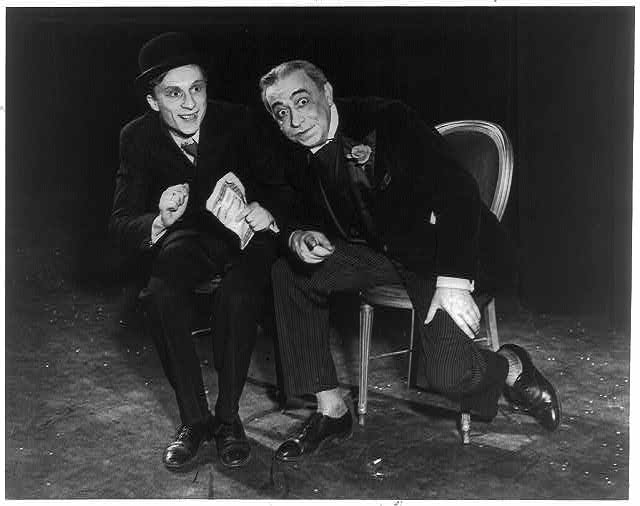
Two actors on stage during a rehearsal. Library of Congress, Prints & Photographs Division.
The reader problem
Before phones, before laptops, before tape recorders, actors ran lines with whoever they could get. Roommates who barely knew the script. Spouses reading in monotone. Fellow actors who had their own stuff to worry about. A mirror and a lot of imagination.
People wanted to help. That was never the issue. The issue was consistency. Your roommate reads it differently every time. Your friend rushes through cues. Your study partner bails.
You need repetition to get good, but getting repetition depends on other people's schedules. That's the trap.
What changed
The tools evolved. In-person only through the 1950s. Tape recorders in the 60s and 70s, where you'd record the other character's lines and play them back. Phone calls and video chat in the 90s and 2000s. Then apps with robotic text-to-speech in the 2010s, which were better than nothing but worse than a real person.
Now there are voices that actually sound like scene partners. That part is different.
What didn't change: the need for reps. The need for consistent pacing. The need to practice your listening, not just your lines.
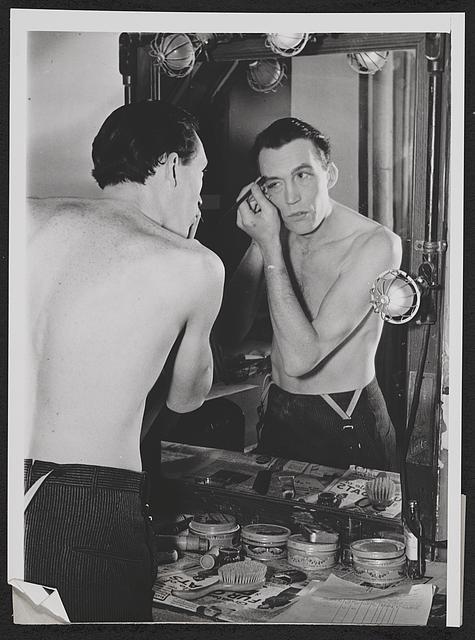
John Huston preparing for a role in "The Lonely Man," Federal Theatre Project, Chicago. Library of Congress.
Why reps matter more than memorization
Every working actor knows this but it's hard to explain to people outside the business: audition prep isn't about memorizing words. It's about response.
You need to hear the other character's line and react to it with real timing, real emotion, the kind of present-tense listening that makes a casting director lean forward. You can't practice that alone. You need someone reading to you.
Actors in the Federal Theatre Project knew it. Actors running lines in their apartments in 1955 knew it. The actor on their couch tonight with sides due tomorrow knows it too.
The problem never went away. The solution just finally caught up.
Paste your sides. Pick a voice. Run it as many times as you need. No scheduling, no favors, no inconsistency. The actors of the 1930s would have loved this. Today it takes 30 seconds to set up.
Images courtesy of the Library of Congress, Prints & Photographs Division. Public domain.