Cold Reads Book Roles. Train Yours.
Ask casting directors what they notice and they'll tell you the same thing. The actors who book can cold read. Not speed-read, not sight-read. They can pick up material they've never seen, find something true in it, and play it with conviction on the first pass.
It looks like talent. It's a skill. And actors have been training it the same way for almost a century.
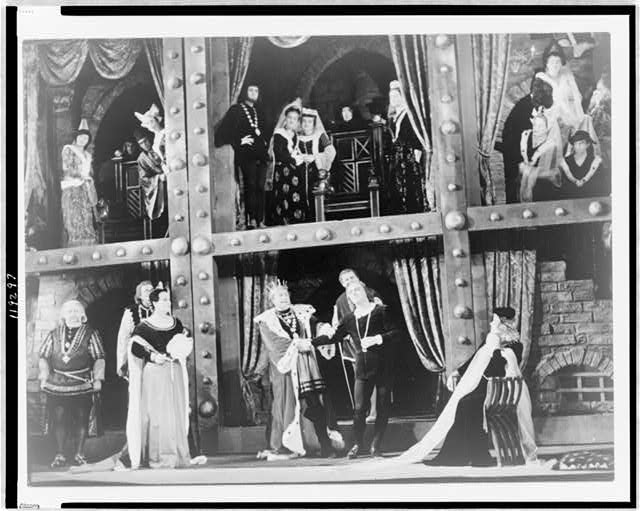
Act II, Scene 3 of "Hamlet" at the Mayakovsky Theater, Moscow. Library of Congress.
What's actually happening in a cold read
A cold read isn't just "reading without preparation." There are specific things firing at the same time: your eyes are scanning 2-3 lines ahead of your mouth, you're responding to the reader's line instead of just waiting for your cue, you're committing to an interpretation even when you're not sure, and when you stumble you stay in the scene instead of breaking.
None of that is natural. All of it is trainable.
How actors used to train this
In the golden age of repertory theater, actors performed a different play every week. Sometimes every few days. That schedule forced cold reading into a survival skill.
There were a few common methods. The "first read" approach: pick up a script, read it once for story, once for your character, then perform it. That's all you get. Or the partner swap, where two actors trade monologues they've never seen and perform them after ten minutes of prep. Forces you to make quick choices and commit.
Directors in the Federal Theatre Project era ran full table reads on day one with no prior script access. The actors who did well were the ones who had trained themselves to listen and react in real time.
More cold reads now, less support
Actors today don't get less cold reading. They get more of it, with less infrastructure around them. Self-tape auditions arrive with 24-hour deadlines. Sides show up the morning of an in-person read. Callbacks use different scenes than the original audition. Chemistry reads pair you with a stranger.
The demand is higher than ever. But the things that used to build the skill naturally, like ensemble companies, rep schedules, and daily table reads, have mostly disappeared.
A simple training regimen
Cold reading responds to practice faster than almost any other acting skill.
Spend 10 minutes a day on unfamiliar sides. Any genre. Read them out loud with a reader. Don't prep. Just go. The point isn't a good performance. The point is getting comfortable being uncomfortable.
Once a week, spend 30 minutes running the same cold read material three times. First pass on instinct. Second pass with one specific adjustment, like pacing or objective. Third pass, put it all together. Track how much your third pass improves over time. That gap is your cold read muscle getting stronger.
Once a month, record a cold read and watch it back. Not to judge yourself. Just to notice. Where do your eyes drop to the page? Where do you stop listening? Where do you play it safe? Those are the things to work on next month.
It's about listening
The actors who thrived in weekly rep, who nailed table reads on day one, who walked into auditions cold and booked, all understood the same thing. Cold reading is about listening, not reading. When your listening is strong, the words take care of themselves. When you're actually hearing the other character, your responses are honest, your timing is real, and the casting director sees someone who's in the scene.
That's what reps build. Not memorization. Listening.
Actor Reader gives you unlimited cold read practice. New sides, new voices, no scheduling. Paste unfamiliar material and go. The actors of the 1930s built this skill through sheer volume of performance. You can build it the same way, just faster.
Header image courtesy of the Library of Congress, Prints & Photographs Division. Public domain.