How to Memorize Lines Fast: 7 Techniques Professional Actors Actually Use
Every actor has been there. Sides in hand, audition tomorrow, and the lines just won't stick. You read them ten times, look away, and your mind goes blank.
Here's the thing most actors figure out eventually: memorization isn't about repetition. It's about understanding. The actors who learn lines fastest aren't the ones who read them the most. They're the ones who know why each line exists.
Here are seven techniques that actually work, drawn from decades of professional acting practice.
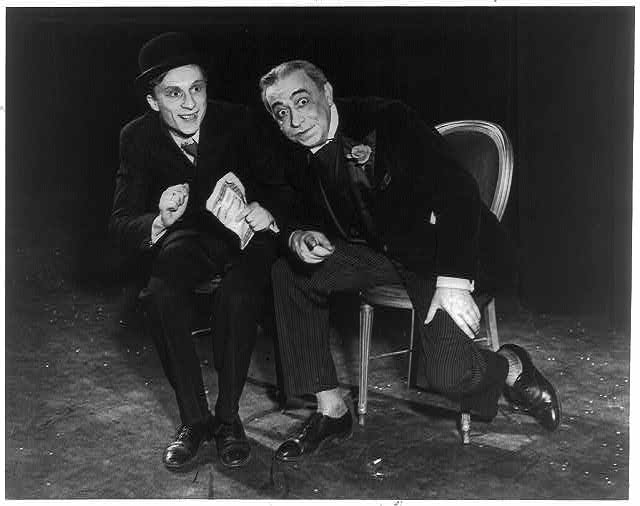
Actors during a stage rehearsal. Library of Congress, Prints & Photographs Division. Public domain.
1. Read for Meaning First, Words Second
Before you try to memorize a single line, read the entire scene three times for story. Not your lines. The story.
- What does your character want in this scene?
- What's stopping them from getting it?
- What changes between the beginning and the end?
When you understand the journey of a scene, the lines become landmarks on a path instead of random words on a page. Your brain retains sequences much better than lists.
Try this: After your third read, close the script and tell someone (or yourself) what happens in the scene. If you can narrate the story, you're 60% memorized already.
2. Break the Script Into Beats
Don't try to memorize page by page. Break the scene into beats, small units where something shifts. A new topic, a change in tactic, a reversal.
Most scenes have 4 to 8 beats. Memorize one beat at a time, then chain them together. This is how professional stage actors learn full plays in weeks: beat by beat, scene by scene.
A beat might be three lines or twelve. The size doesn't matter. What matters is that each beat has its own intention, which gives your memory a hook.
3. Write Your Lines Out by Hand
This is old-school and it works. Write out your lines, just yours and not the whole scene, in longhand. No typing. The physical act of writing engages different neural pathways than reading.
Some actors write their lines three times:
- First time: copying directly
- Second time: from memory, checking as needed
- Third time: entirely from memory
By the third pass, most of it sticks. The hand remembers what the eye forgets.
4. Run Lines Out Loud With a Reader
Silent reading is not rehearsal. Your mouth needs to form the words, your ears need to hear the cues, and your body needs to respond to the other character's lines.
This is where a scene partner matters, even a digital one. When you hear the cue line and respond in real time, you're training muscle memory, not just intellectual memory. The line becomes a reaction, not a recitation.
Run the scene five times in a row. By the third run, you'll notice you're looking at the script less. By the fifth, you might not need it at all.
5. Record the Other Lines and Practice in the Gaps
A technique actors have used since tape recorders existed: record the other character's lines with pauses where your lines go. Play it back and fill in the gaps.
This works because it forces active recall: your brain has to produce the line, not just recognize it. Recognition is easy. Production is what you need in the audition room.
The gap method also trains your timing. You learn not just what to say but when to say it.
6. Physicalize the Lines
Attach movement to text. It doesn't have to be your final blocking. Just give your body something to do while you speak.
- Walk to a specific spot on a certain line
- Pick up an object during a particular beat
- Change your posture when the scene shifts
Physical anchors give your memory spatial context. Theater actors have known this forever: you remember lines better when you associate them with movement. It's why actors who rehearse seated often go blank when they stand up.
7. Use Spaced Repetition (Sleep On It)
Cramming works for tomorrow. Spaced repetition works for keeps.
Run your lines before bed. Your brain consolidates memory during sleep. This is neuroscience, not folk wisdom. Then run them again first thing in the morning. The overnight gap forces your brain to retrieve the material, which strengthens the neural pathways.
For auditions more than a day out:
- Day 1: Learn the lines (beats, meaning, first runs)
- Day 2: Run from memory, fill gaps, run again
- Day 3: Full runs only, no looking at the script
By day three, you're not memorizing. You're performing.
The Mistake Most Actors Make
The biggest memorization mistake is starting too early with pure repetition and no understanding. If you don't know why your character says a line, you're memorizing arbitrary words. Your brain treats them like a phone number: forgettable.
But if you know that your character says "I'm fine" because they're hiding devastation, that line has emotional weight. Weight is memorable. Context is memorable. Meaning is memorable.
Understand first. Memorize second. Run lines third. That's the order.
Build the Habit
The actors who memorize fastest aren't naturally gifted. They've just done it more. Like any skill, memorization gets easier with practice.
Pick up unfamiliar sides and run them with a scene partner. Do it daily. Over time, your memorization speed increases not because you're trying harder, but because your brain gets better at the process.
Start running lines for free →
Image courtesy of the Library of Congress, Prints & Photographs Division. Public domain.