How to Run Lines by Yourself (When You Don't Have a Scene Partner)
You've got the sides. The audition is tomorrow. And you don't have anyone to run lines with.
This is the most common problem in acting. Not talent, not training, not headshots. Just finding a reliable human being who'll sit down and read the other part. Your friend is busy. Your roommate reads in monotone. Your acting partner has their own audition to prep for.
So how do you run lines when it's just you?
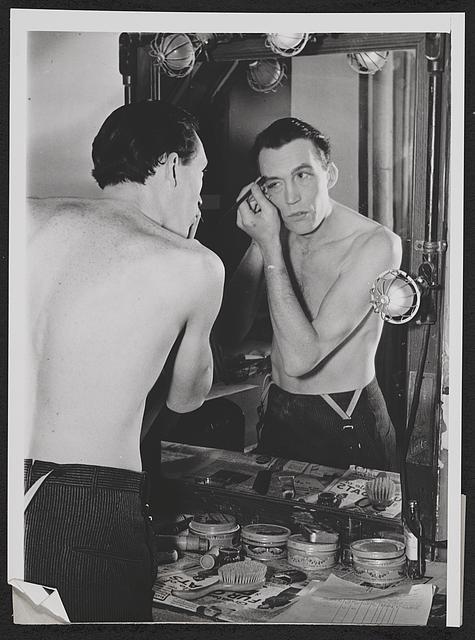
John Huston preparing for a Federal Theatre Project role, Chicago. Library of Congress.
Why Running Lines Matters More Than Memorizing Them
First, let's be clear about what "running lines" actually means. It's not memorization. Memorization is knowing the words. Running lines is practicing the conversation.
When you run lines with a reader, you're training three things at once:
- Listening: hearing the cue and responding to it, not just waiting for silence
- Timing: finding the natural rhythm of the scene
- Impulse: letting the other character's words affect you before you speak
This is why reading your lines silently ten times doesn't prepare you for an audition. You need to practice the exchange, even if the other side of it is imperfect.
Method 1: The Cover-and-Reveal Technique
The simplest method. No technology required.
- Place your script on a table
- Cover the other character's lines with a piece of paper
- Read your first line, then slide the paper down to reveal the next cue
- Respond to it, then cover and continue
This forces active recall because you can't see what's coming. It also trains your eyes to stay up. You learn to hold the line in your head before you speak it, which is exactly what a good cold reader does.
Best for: Early-stage memorization, getting lines into your body.
Method 2: Record the Other Lines
Record yourself reading all the other character's lines, leaving pauses where your lines go. Play it back and fill in the gaps.
This was the go-to method for decades before smartphones existed. Actors used tape recorders, then CDs, then voice memos. It still works.
Tips for better recordings:
- Read the other lines with some energy, not flat monotone
- Leave pauses that are slightly shorter than you think you need (forces you to be ready)
- Record the cue lines only. Don't read your own lines into the recording
Best for: Commutes, walks, any time you can have earbuds in.
Method 3: Use a Scene Partner App
The most effective solo method available today. Upload or paste your sides, select a voice, and run the scene in real time. Your reader handles the other character's lines, you respond with yours.
This is the closest you'll get to a real scene partner without another human. Consistent pacing, no skipped lines, no cancellations, and available at 2 AM when your audition is at 9 AM.
Why it's better than a recording: It's interactive. You're responding to a voice in real time, which trains your listening and timing, not just your recall.
Best for: Full scene runs, timing practice, final prep before auditions.
Method 4: Write Only Your Lines
Take a blank piece of paper. Write out only your character's lines, in order, with no other context. Then try to remember what comes before each of your lines. What's the cue?
This reverses the typical approach. Instead of memorizing your lines and hoping you'll recognize the cues, you memorize the connection between cue and response. That connection is what matters in performance.
Best for: Actors who know their lines but keep missing cues.
Method 5: The Empty Chair
Set up two chairs facing each other. Sit in one. The other chair is your scene partner.
Run the scene out loud. Say your lines to the empty chair. When it's the other character's turn, either:
- Say their lines yourself (switching focus)
- Skip to your next cue (faster, less thorough)
- Imagine their line and respond to the silence
This sounds strange. It works. The physical setup, two chairs facing each other, triggers something spatial in your brain. You start playing the scene, not just reciting words.
Best for: Getting out of your head and into the scene.
Method 6: The Walk-and-Talk
Go for a walk. Leave the script at home. Try to run the scene from memory while you walk.
Movement activates different parts of the brain than sitting still. You'll find that lines you couldn't remember at your desk suddenly come back when you're walking. When you hit a blank, stop walking. Try to remember. If you can't, that's the line you need to work on when you get home.
Best for: Testing how well you actually know the material.
How to Make Solo Practice Actually Effective
Running lines alone can feel pointless if you're just going through the motions. Here's how to make it count:
Set a specific goal for each run. Don't just "run it again." Run it for timing this time. Run it for volume next time. Run it without looking at the script the time after that.
Don't stop when you mess up. In an audition, you can't stop and start over. Train yourself to recover and keep going. Stumbles are part of the process.
Record yourself occasionally. Not to judge, but to observe. Where do your eyes drop? Where does your energy flatten? Where do you stop listening to the imaginary reader?
Run it more times than you think you need. If you can do it once from memory, you're not ready. If you can do it five times in a row without looking, you're getting there. The audition room adds pressure that eats 20% of your preparation. Compensate by over-preparing.
The Real Problem (And the Real Solution)
The real problem isn't that you don't have a scene partner. The real problem is that the acting industry assumes you'll always have one. Every class, every rehearsal, every technique assumes a partner across from you.
But most of your career as an actor is spent preparing alone. Waiting for sides. Running them in your apartment. Taping yourself with no reader.
The actors who book consistently are the ones who've figured out how to make solo practice work, who've built systems that don't depend on someone else's schedule.
Build that system. Use it daily. Your auditions will show the difference.
Try running lines with a scene partner →
Image courtesy of the Library of Congress, Prints & Photographs Division. Public domain.