Stage Door: The Actors Who Were Always Ready
In 1942, the basement of the 44th Street Theatre in Manhattan became something worth knowing about. The American Theatre Wing opened the Stage Door Canteen, a club where servicemen and women could eat, dance, and watch live entertainment. All free.
The entertainment came from Broadway's biggest names. Every night. Voluntarily.
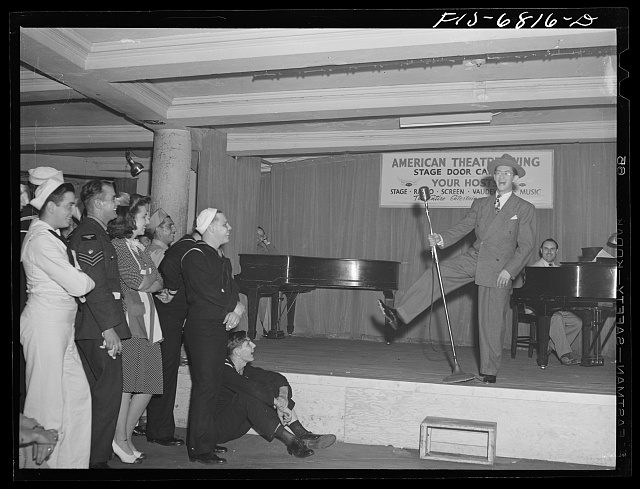
Broadway entertainment for the armed forces at the Stage Door Canteen, run by the American Theatre Wing. New York City, 1943. Library of Congress, FSA/OWI Collection.
Three years of showing up
The Stage Door Canteen ran for three years and served close to three million visitors. Katharine Hepburn performed there. Count Basie played there. But the real story isn't the celebrities. It's the working actors who showed up night after night, performed scenes and monologues and sketches, served food, washed dishes, and did it all again the next day.
They had one thing in common. They were always ready.
Not because they had unlimited prep time or perfect conditions. Because they'd put in enough reps that performing was second nature.
What "always ready" actually looks like
There's a real difference between an actor who can perform and an actor who's ready to perform. The Stage Door Canteen required the second kind.
Stage Door actors sometimes got asked to go on with 30 minutes notice. That's basically what happens now when sides show up the night before or the morning of an audition. The actors who book aren't the ones with the most prep time. They're the ones who treat preparation as a daily thing, not a scramble.
The Canteen performers also didn't have the luxury of not feeling it on a given night. They showed up, they performed, and they were good. Night after night. Auditions work the same way. Booking consistently comes from training yourself to deliver a solid, grounded, truthful read every time, because you've done it hundreds of times before.
And the audience at the Canteen had no idea what was going on in that actor's life. Maybe she'd just finished an 8-show week. Maybe he was fighting a cold. The soldiers saw the performance, and that was it. Casting directors are the same way. They don't know you got the sides late, that your reader bailed, or that your apartment is loud. They see what you bring into the room.
Building that habit
The Stage Door actors stayed ready through sheer volume of performance. You can build the same kind of readiness with less.
Run one scene a day. Pick something you haven't worked on before. Run it with a reader. Don't judge it, don't overthink it. Just do the work. Over a month that's 30 cold reads. Over a year that's 365 scenes you've played. That kind of volume turns "I need to prepare" into "I'm always prepared."
It works because the stakes are low (it's practice, not a performance), the frequency is high (daily reps build reflexes), the reader is consistent (same pacing, same availability, every time), and you don't need another person's calendar to line up with yours.
Still the standard
The American Theatre Wing still exists. They still support working actors. And that Stage Door spirit, artists showing up ready to work no matter what, is still the standard.
Every time you run lines before an audition, you're in that tradition. Every time you put in the reps when nobody's watching, you're doing what those Broadway actors did in 1942. Staying ready.
They had to find a partner. You just need your phone.
Image courtesy of the Library of Congress, FSA/OWI Collection. Public domain.